Polyvagal Theory: a framework that informed how I see the body
For years, I taught movement before I had language for what I was witnessing.
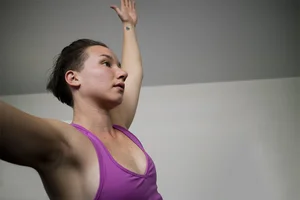
Clients would arrive carrying the weight of their day—tight shoulders, shallow breathing, racing distracted thoughts. We'd spend an hour moving mindfully, breathing, noticing sensations, and reconnecting with their bodies. By the end of our session, something had shifted. Their posture softened, their breathing deepened, and they often left feeling calmer, lighter, more content, and present.
At the time, I would have said they had simply "relaxed" or “settled.”
Now, I understand that many of those changes reflected something deeper: their nervous system had regulated by finding a little more safety and security.
Discovering Polyvagal Theory gave me a framework for understanding what I had been observing all along.
What is Polyvagal Theory?
Developed by neuroscientist Dr. Stephen Porges, Polyvagal Theory expands our understanding of the autonomic nervous system—the part of our nervous system that regulates many of the body's automatic functions like heart rate, breathing, digestion, and our stress response.
Most of us are familiar with the idea of "fight or flight" or “rest and digest,” but Polyvagal Theory suggests our nervous system is more nuanced than that. It proposes that we move between different physiological states depending on whether our nervous system perceives safety, danger, or overwhelming threat.
One of my favorite ideas from the theory is a term called neuroception—our nervous system's ability to constantly scan our internal and external environment for cues of safety or danger, often without our conscious awareness.
Why It Matters
Learning this theory didn't suddenly change how I worked. Instead, it gave me language for practices I already knew were helpful.
Grounding. Mindful movement. Breath awareness. Slowing down. Spending intentional time paying attention to the body.
I realized I wasn't simply helping people stretch muscles or improve mobility—I was often creating conditions that allowed their nervous system to settle.
When our bodies experience greater safety, we often think more clearly, connect more easily, breathe more freely, and access greater flexibility—not just physically, but emotionally as well.
It's a Framework, Not a Rulebook
One of the reasons I appreciate Polyvagal Theory is also one of the reasons it receives criticism. Like any scientific model, it is a framework designed to help us understand something incredibly complex.
Some researchers question aspects of its anatomical explanations or evolutionary claims. Others worry that it can be oversimplified or applied too broadly in therapeutic settings.
I think these critiques are valuable. Science grows by asking good questions. At the same time, I don't believe a framework has to explain everything perfectly to be incredibly useful.
For me, Polyvagal Theory offers a compassionate lens through which to understand human experience. It encourages us to ask not, "What's wrong with this person?" but rather, "What might their nervous system be responding to?"
Why I Keep Coming Back to It
Whether future research confirms, revises, or expands parts of Polyvagal Theory, its greatest gift has already influenced my work.
It reminds me that our bodies are always trying to protect us.
Many of the patterns we struggle with aren't signs that our bodies are failing us—they're often signs that our nervous systems have adapted remarkably well to life's challenges.
When we create more opportunities for safety through movement, rest, mindful awareness, meaningful relationships, and compassionate curiosity, we support the body's incredible capacity to heal, adapt, and reconnect.
And that's work I'm honored to be part of.